Waste to Energy-01
2026-01-17
Application to WTE(Waste-to-Energy)-01
Introduction to Waste-to-Energy (WTE) Applications
This blog post will explain, with diagrams, the most basic method for operating a Waste-to-Energy (WTE) facility using the incinerator introduced in this blog. However, this guide was written with consideration given the limited capacity of the incinerator being introduced.
First, we will introduce a WTE facility dedicated to SPCW thermal treatment, equipped with a 2MW steam boiler-based power generation facility.
The WTE facility is equipped with all waste input devices and dust collection facilities after the incinerator.
Incinerator Size
Chambers used in WTE for SPCW thermal treatment should be at least 1,500 mm in diameter (2,000 or 2,500 mm recommended). Parallel operation of multiple incinerators is recommended.
This ensures sufficient heat generation. Connecting two or more incinerators in parallel ensures continued operation in the event of one chamber failure.
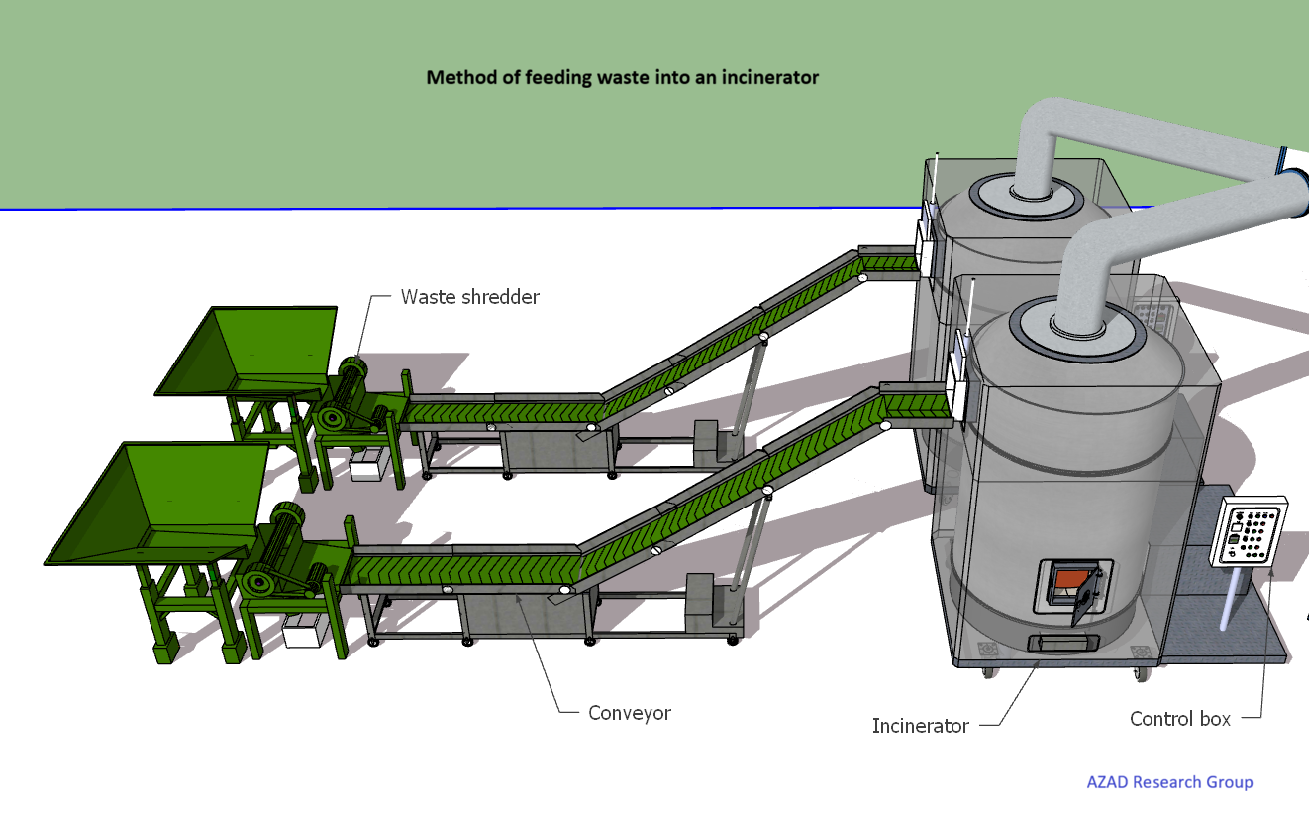
Parallel connection of incinerators
This blog assumes that two chambers larger than 1500 mm are connected in parallel to thermal treatment of SPCW.
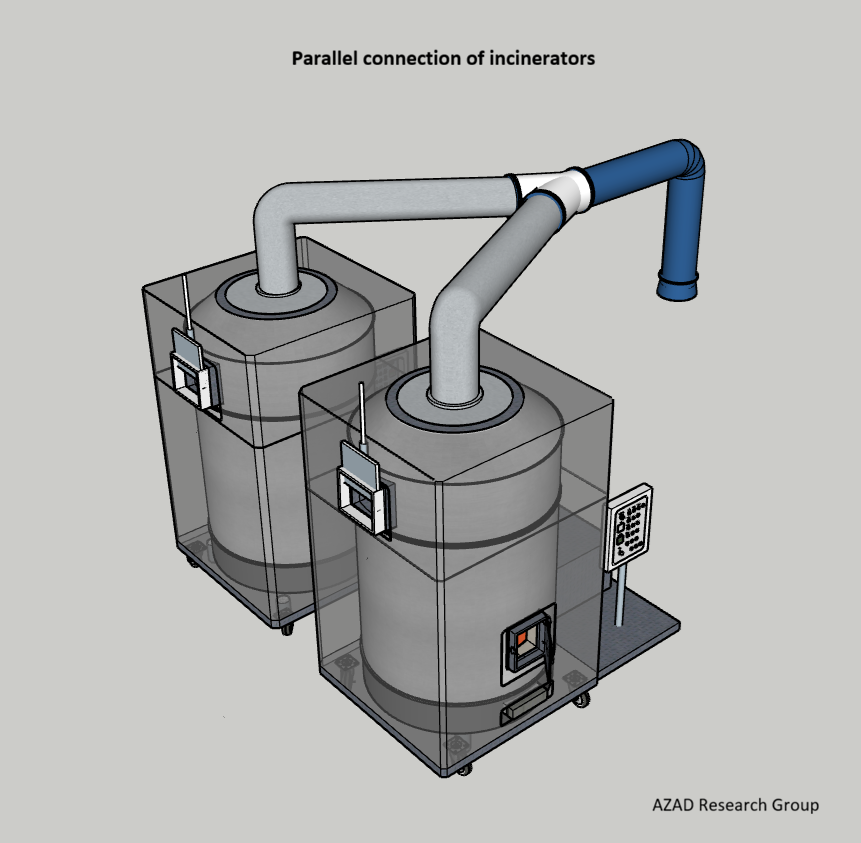
Overall concept of WTE using steam boiler and generator
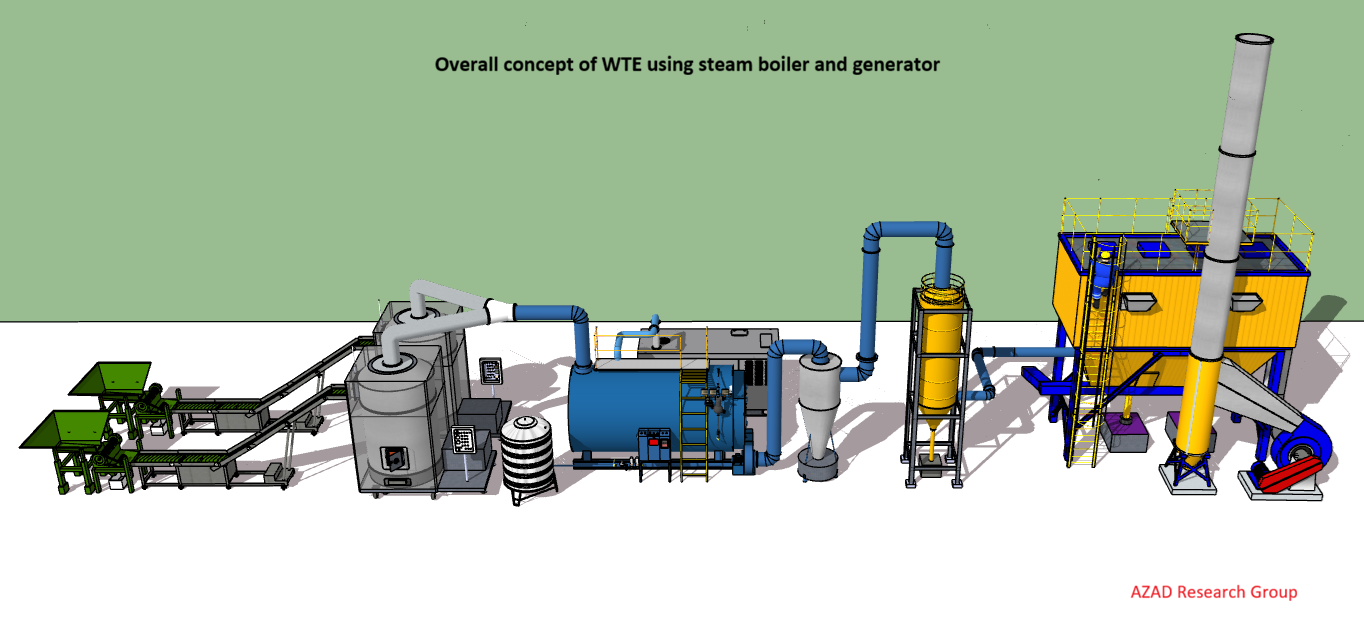
Method of feeding waste into an incinerator
- Glass bottles, cans, and stones are sorted and removed from the waste fed into the chamber, the waste is crushed in a shredder, and then loaded onto a conveyor belt
- Glass bottles, cans and rocks are the only materials that cannot be thermal treated in this incinerator