Applicable to marine waste collection vessels(01)
2026-01-17
1. Introduction
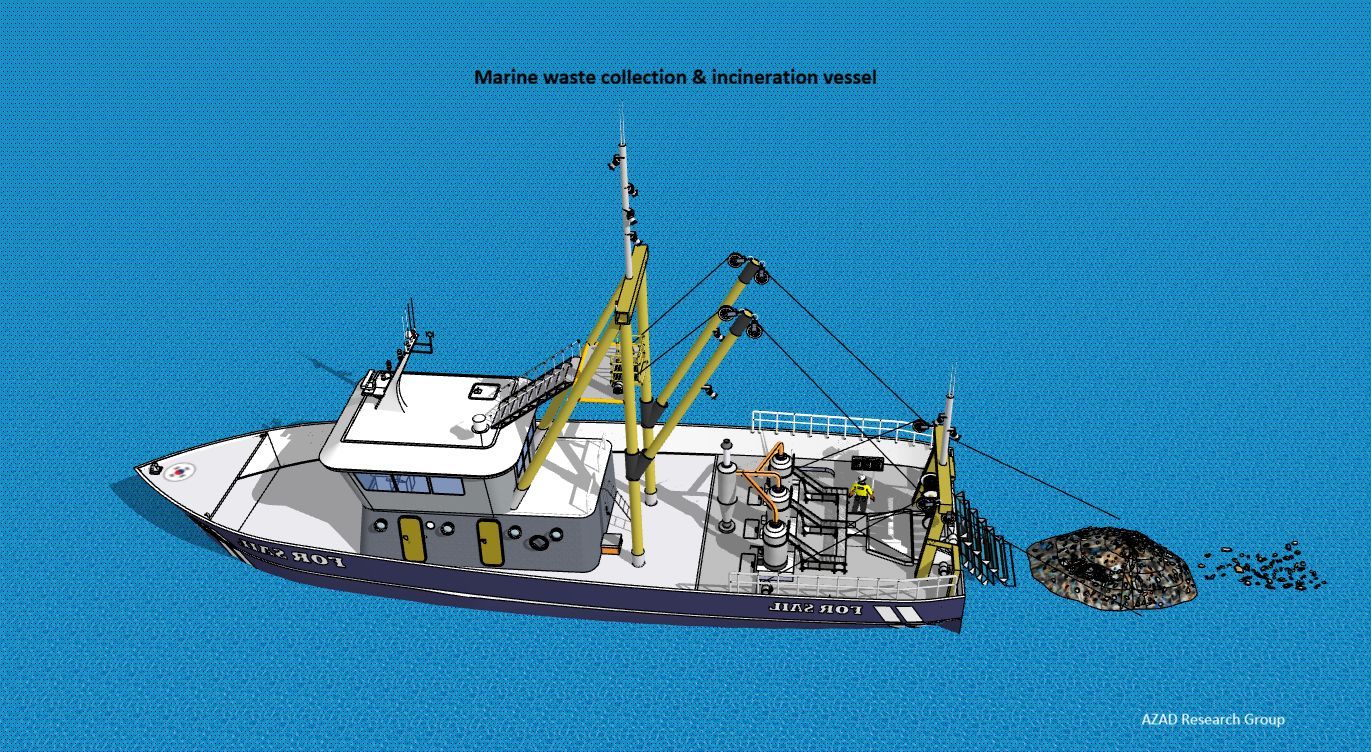
This technology can collect and thermally treat marine waste in an environmentally friendly manner.
This blog post introduces a method for collecting and thermal-treating marine waste. This method utilizes a chamber that exhibits excellent heat treatment performance despite its moisture content.
2. Key Factors
- Types of thermal-treatable marine wastes.
- Eco-friendly thermal treatment of high-moisture marine waste
- Chamber Controls
3. Types of thermal-treatable marine wastes
Simply put, any waste floating in the ocean can be treated using this thermal treatment technology. The only exceptions are things like clogged glass bottles and butane gas canisters.
4. Eco-friendly thermal treatment of high-moisture marine waste
Unlike batch incinerators, this method can continuously feed waste into the upper part of the chamber, and can sufficiently thermal treat marine waste with a high moisture content (waste with a moisture content of about 80%) after a slight dehydration process.
Most SPCW have very low water content. Therefore, simply shaking off the moisture on the surface of the collected SPCW will suffice for thermal treatment in this type of chamber. In this area, it is also crucial to expand quantitative data after implementation.
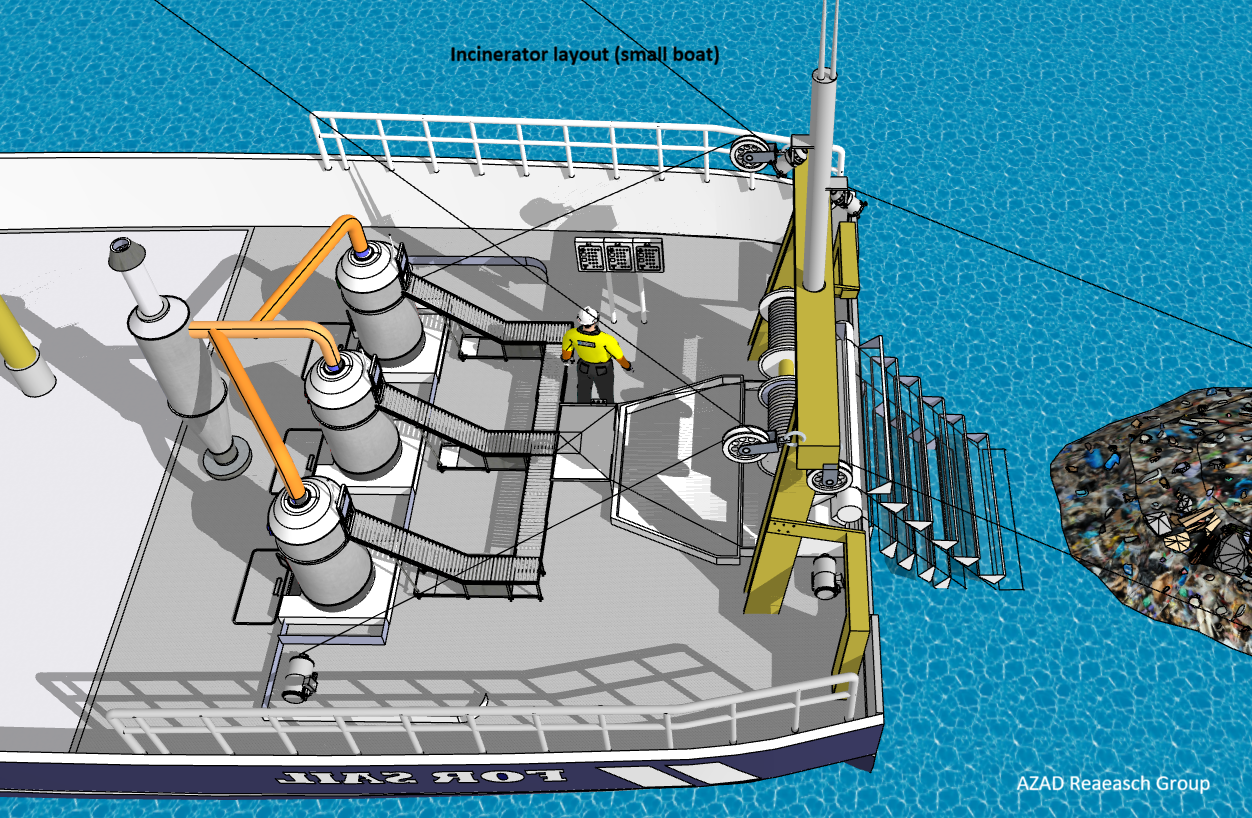
Considering the ocean environment, a bag filter-type dust collector was installed. This area also requires data collection on the results of field tests to improve its structure and performance.
Chamber controls
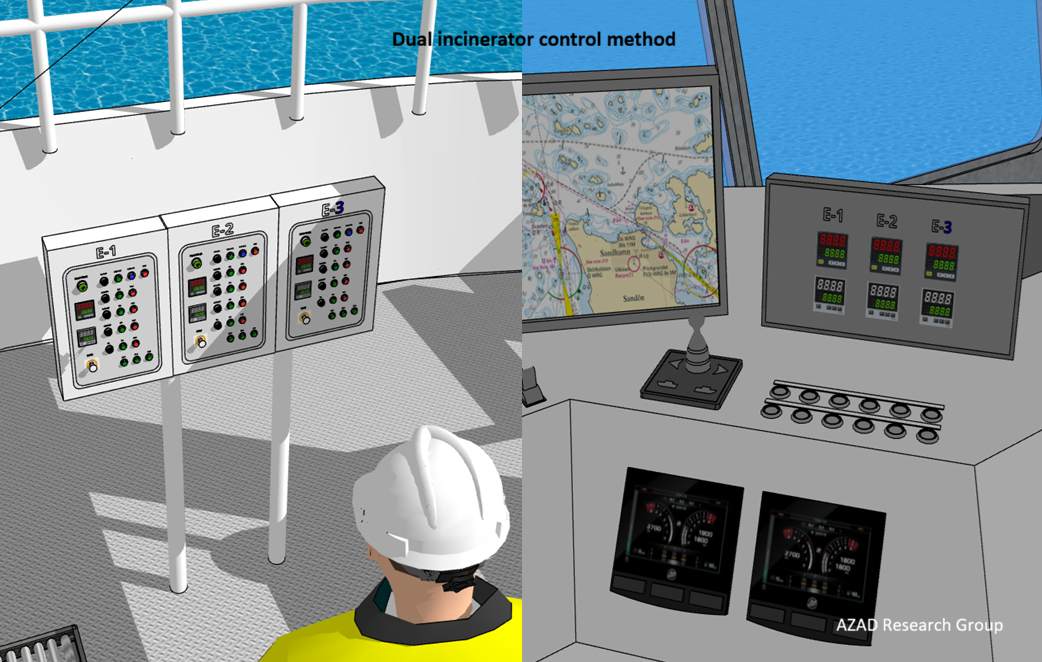
Control of the operation of each chamber is possible through the control box on the deck and the control system installed in the cabin, allowing for independent or mixed operation.
Document status
- Stage: Concept
- Last updated: 2026-02-07
-
Looking for: peer review