Heat utilization analysis of technology
2026-01-13
1. Introduction
This system achieves complete thermal treatment through a sequential process of high-temperature thermal decomposition, controlled oxidation, and structurally ensured complete oxidation, rather than conventional incineration.
2. Key Factors
- Thermal decomposition by high temperature
- Progress of oxidaton and thermal treatment
- Unnecessary secondary chamber
3. Putting Waste into the treatment system(chamber)
This system requires that waste be fed into the top of the system. The ash discharging pot at the bottom of the chamber must remain closed during thermal treatment. This means that if the system lid is closed, waste must be fed through a separate waste inlet located in the lid.
Furthermore, the amount of waste fed during thermal treatment cannot exceed the height of the primary air nozzle located below the central air injection pipe(Central Rod).
4. Thermal decomposition by high temperature
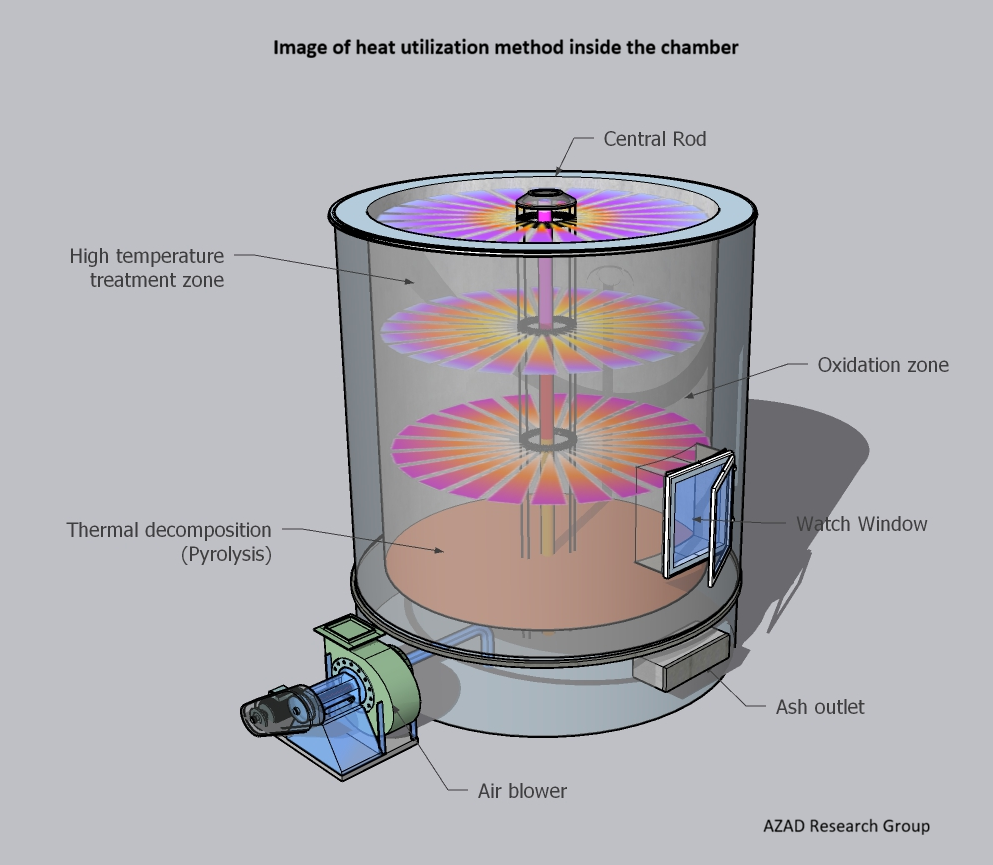
Once waste is introduced, high-temperature thermal decomposition (pyrolysis) occurs in the lower zone. The resulting gases then move upward into oxidation stages, where structurally ensured complete oxidation takes place. The stable high-temperature environment generated through this process enables comprehensive thermal treatment across all stages of the system.
Heat Utilization Concept
5. No need for a secondary chamber
Unlike incinerators that typically require a secondary chamber, this system handles both oxidation and thermal treatment processes simultaneously within a single system(chamber unit), eliminating the need for a separate secondary chamber.
6. Complete Oxidation at High Temperatures
The high temperatures generated during complete oxidation (800-1200 degrees Celsius) do not emit environmentally hazardous substances.
Complete oxidation requires not only sufficiently high temperatures, but also sufficient time for combustion gases to remain in the high-temperature region (typically more than 2 seconds), and turbulence to ensure smooth mixing of fuel and oxygen.
When these three conditions(3T’s) are met simultaneously, complete removal of hazardous substances is possible without black smoke or unpleasant odors.
7. Flame of complete oxidation
Note
The posts on this blog will be continuously updated.
Last update: 2026-02-05